Ask anyone who lives here where they're headed after dinner and you'll get an answer with a park name in it, not a restaurant. Redbud. Pistache. Down past The Crossings toward the water. Nobody says they're going out to eat, because for most of the town's history there wasn't much of anywhere to go. The parks came first. The businesses are still catching up.
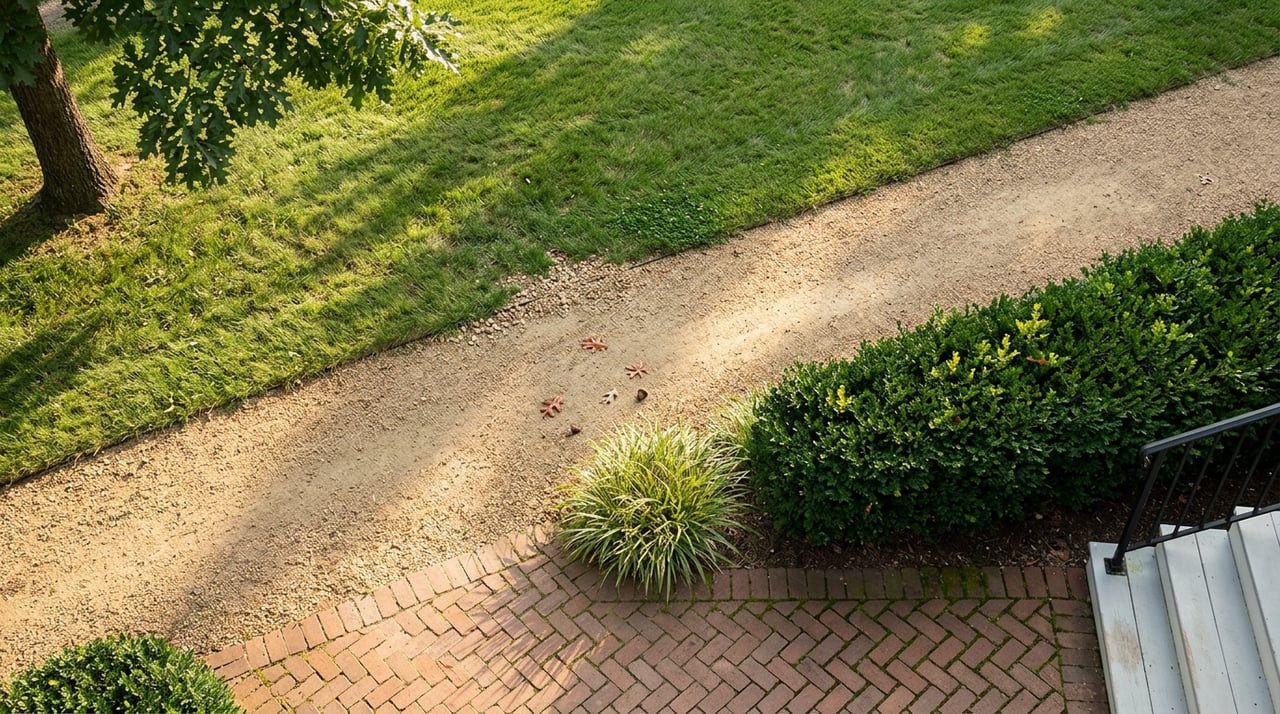
That order matters more than it sounds like it should. Most small towns build their commercial spine and let green space fill in around it later, if at all. Carlton Landing did the opposite. The town platted a network of pocket parks and five miles of shoreline trail years before it had more than a pizza counter and a coffee bar to show for retail. The result is a place where the evening walk isn't a stroll past storefronts. It's a circuit through a series of small, deliberately different parks, each one built to serve the pocket neighborhood around it rather than the town as a whole.
The Parks Got Here First
Carlton Landing's own team has described the town as still in its early stages, growing slowly enough that whatever opens can actually be supported by the people living there. For a long stretch, that meant Mama Tig's Pizza, The Meeting House for coffee and simple meals, and a food truck park that only ran in summer made up most of the commercial footprint. Compare that to the amenity side: five miles of gravel trail along the Lake Eufaula shoreline, a Nature Center built in partnership with The Nature Conservancy, and a scattering of named parks tucked into nearly every neighborhood.
That gap between how much green space exists and how much retail exists is the whole story of what an evening here looks like. You're not walking to a place. You're walking a route, and the route is made of parks.
The Loop, Park by Park
The actual geography of that route depends on which neighborhood you start in, but the stops repeat enough that most residents could sketch the same rough map. Here's what's actually on it:
- Firefly Park is the largest tree-lined green in town, big enough for flag football or a pickup game of croquet, and it's the anchor for the cottage homes built around it.
- Redbud Park sits next to the bocce courts under a canopy of larger, older trees. It's the shadiest stop on the loop and the one locals default to for dog walking or a picnic blanket.
- Pistache Park is the one nobody explains to newcomers by its actual name. Residents just call it the hidden park. It's tucked at the end of a walkway strung with lights, with a slide, a balance beam, and two hammocks for whoever gets there first.
- Pavilion Park functions as the town's front door and its stage. A covered pavilion at the north end hosts concerts and community gatherings, and it's built to flex from a neighborhood barbecue to a wedding reception without missing a beat.
- The Crossings is smaller and more private, a U-shaped green ringed by homes that feels less like a park and more like a shared backyard.
None of these were designed to be interchangeable. Each one reads differently depending on whether you want shade, a hammock, an audience, or just a quiet patch of grass surrounded by neighbors who happen to also live there.
The Furniture of a Walk
What makes the loop function as a daily habit rather than a scenic detour is the small stuff scattered along it. Fire pits ringed with Adirondack chairs show up at several points through the community, informal enough that nobody needs an invitation to sit down. Four ping pong tables are spread across town at Pavilion Park, the Park Street Lake Approach, Bocce Ball Park, and the Boardwalk Pool, which means a paddle is never more than a few minutes' walk from wherever you are. The Courts, a set of lit acrylic surfaces built for tennis, pickleball, and basketball, sit with lake views close enough to Ridgeline and Lower Greenway that both neighborhoods treat them as their own.
The Nature Center adds a different texture entirely. Built alongside Carlton Landing Academy through the partnership with The Nature Conservancy, it gives residents and students walking trails and an outdoor playground that reads more like a working classroom than a typical neighborhood amenity. It's the one stop on the loop that's as much about education as recreation, closer to a school field site than a place to watch the sunset.
None of this required a commercial district to work. A fire pit doesn't need a storefront next to it. A ping pong table doesn't need foot traffic from a retail anchor. The infrastructure of daily life here was built to stand on its own, which is exactly why the loop existed long before there was much to buy along it.
What's New on the Loop Lately
The retail side is finally starting to fill in, but it's doing so inside the existing park geography rather than building a new commercial strip to compete with it. Festival Breeze, a mocktail shack operating just behind Mama Tig's, gives the pizza spot's regular crowd a citrus-and-berry option that doesn't require a full sit-down order. Sweet Grace Soda Bar joined the mix with handcrafted sodas and specialty coffee drinks, the kind of stop that works as a five-minute detour on the way back from Swim Beach rather than a destination in its own right. BeautyBar34, a med spa in Steele Park run by aesthetician Kylie Martin, adds a service many residents used to drive to Eufaula or McAlester for.
What ties these together is scale. None of the three tries to anchor a shopping district. Each slots into an existing pocket of the town, close enough to a park or a pool that it becomes part of the loop rather than a reason to leave it. That's consistent with how the marina has grown too. Recent expansion brought the slip count to 146 boat slips and 72 PWC slips, with plans for a full-service shop and restaurant still in the works rather than already open. The pattern holds: infrastructure and green space lead, commercial space follows at a pace the town can actually support.
A Few Things Worth Knowing Before You Head Out
Not every stop on the loop runs on the same clock. The Boardwalk Pool, with its splash pad and hot tub, stays open year-round, which makes it the one reliable water stop in the colder months. Tower Court Pool and the Lakeside Pool are seasonal, open from May 1 through the day after Labor Day, so a summer evening loop and a January one won't look the same. Swim Beach adds kayaks, paddleboards, and floating lily pads through Lake Days rentals during the warm months, and a Lake Days Aqua Park has joined that same stretch of shoreline, which gives the swim beach leg of the walk more going on than a simple sandy cove.
None of that changes the shape of the loop. It just changes what's waiting at the end of it depending on the season.
If you've lived here for a while, none of this is a surprise. You already know which park has the shade and which one has the hammocks nobody else has found yet. But it's worth naming the pattern out loud, because it says something true about how this town was built. The green space wasn't an afterthought bolted onto a commercial plan. It was the plan, and everything opening now, from a soda bar to a med spa to a marina restaurant still under construction, is being built to fit inside it rather than replace it.
If you're weighing a move within Carlton Landing, or curious how a specific pocket neighborhood connects to this same network of parks and trails, Katie Chapman & Co. knows the town at exactly this level of detail, down to which park sits behind which house. Reach out anytime you want a resident's read on a neighborhood, not just a listing sheet.